This Wasn’t an Outage.
It Was a Live-Fire Exercise—and Most SOCs Didn’t Know They Were in One.
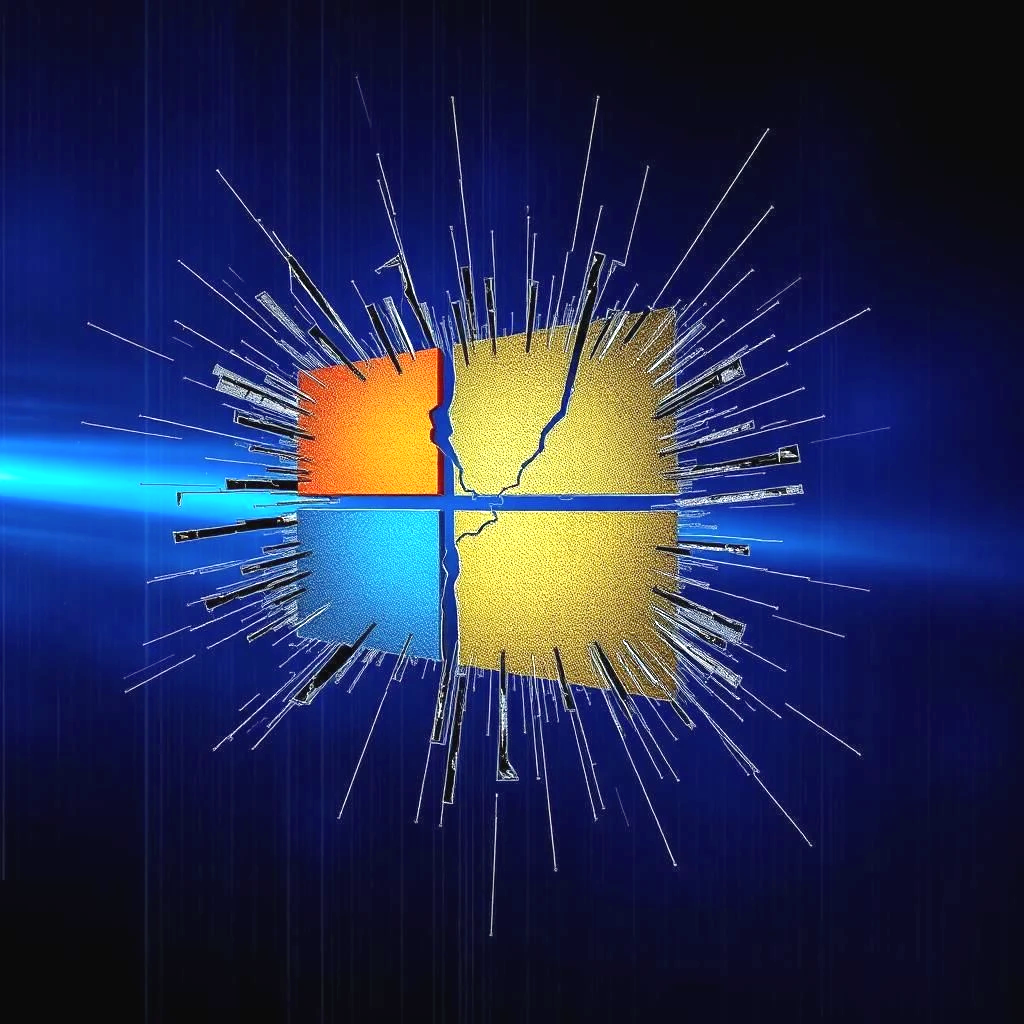
What the world just witnessed on January 13, 2026 during Microsoft’s “patch Tuesday” wasn’t a “bug.”
It wasn’t “downtime.”
It wasn’t an unfortunate update gone wrong.
It was a global-scale security failure disguised as maintenance.
Systems dropped simultaneously.
Endpoints bricked themselves.
SOC dashboards went blind in real time.
And for hours, nobody could confidently say whether the world was under attack—or just betrayed by the tools meant to protect it.
That uncertainty is the real damage.
The Day Trust Became the Threat Vector
For decades, defenders have been trained to hunt outside the perimeter:
-
Malicious links
-
Weaponized payloads
-
Adversary infrastructure
-
Threat actor TTPs
But this incident didn’t come from the shadows.
It came signed.
It came verified.
It came trusted.
When trusted systems fail at planetary scale, they outperform any nation-state adversary ever could.
No phishing campaign has ever taken down airlines, hospitals, banks, and governments in one synchronized motion.
A routine update just did.
SOCs Didn’t Lose Control. Control Was Taken Away.
Let’s be precise.
This wasn’t a skills failure.
This wasn’t an alerting failure.
This wasn’t a response failure.
This was a visibility annihilation event.
-
EDR agents died before they could scream
-
Telemetry pipelines collapsed
-
SIEMs starved into silence
-
SOAR playbooks became decorative fiction
When the observer is the first casualty, detection is a myth.
This is the scenario most security architectures never model, because it forces an uncomfortable admission:
The security stack itself is a single point of failure.

The Monoculture Fallacy
Centralization was sold as efficiency.
Uniformity was sold as control.
Auto-updates were sold as safety.
In reality, they created something far more dangerous:
Synchronized fragility.
When everyone runs the same stack, at the same version, with the same trust assumptions, failure doesn’t spread—it detonates.
Attackers have been trying to achieve this effect for years.
This time, they didn’t need to.
They just watched.
Why This Changes the Threat Model Forever
Forget “Was it a breach?”
That question is obsolete.
The real question now is:
Can your defenses operate when your defenses are the incident?
If your security posture depends on:
-
Continuous endpoint health
-
Vendor uptime guarantees
-
Centralized visibility
-
Perfect telemetry
Then you don’t have resilience.
You have hope.
And hope is not a security control.
This Is the World PhishReaper Was Built For
PhishReaper does not wait for alerts.
PhishReaper does not trust silence.
PhishReaper does not assume stability.
We hunt threat actors and intent before execution.
We track campaign behavior before payloads exist.
We correlate infrastructure, deception, and pre-attack conditioning outside the endpoint monoculture.
When agents crash, we’re still watching.
When logs stop, we’re still correlating.
When dashboards go dark, we’re already ahead of the kill chain.
Because real attackers don’t rely on your tooling either.
A Warning, Not a Postmortem
This incident will be labeled, patched, and quietly buried under a mountain of “lessons learned.”
That would be a mistake.
Because the next wave of attackers won’t copy yesterday’s malware.
They’ll copy yesterday’s failure mode.
They now know what global paralysis looks like.
They know how defenders react when visibility collapses.
They know how long recovery really takes.
And they’re patient.
Final Word
The most dangerous attacks of the next decade won’t look like attacks.
They’ll look like updates.
They’ll look like stability.
They’ll look like nothing at all.
And by the time most defenses wake up, the damage will already be done.
PhishReaper exists for that moment – when trust fails, visibility dies, and hunting is the only option left.
We don’t wait for the breach.
We hunt before the world realizes it was already under attack.
Leave a Reply